

Lasagna Method Gardening: Building Healthy Soil, One Layer at a Time
Lasagna method gardening—also called sheet composting—is a low-effort, high-impact way to build rich, productive garden beds without digging or tilling. Much like its culinary namesake, this method relies on layering ingredients, allowing them to break down over time into a nutrient-dense growing medium.
For community gardens, where soil quality, accessibility, and shared labor are ongoing challenges, the lasagna method offers some compelling advantages—along with a few important considerations.
What Is Lasagna Method Gardening?
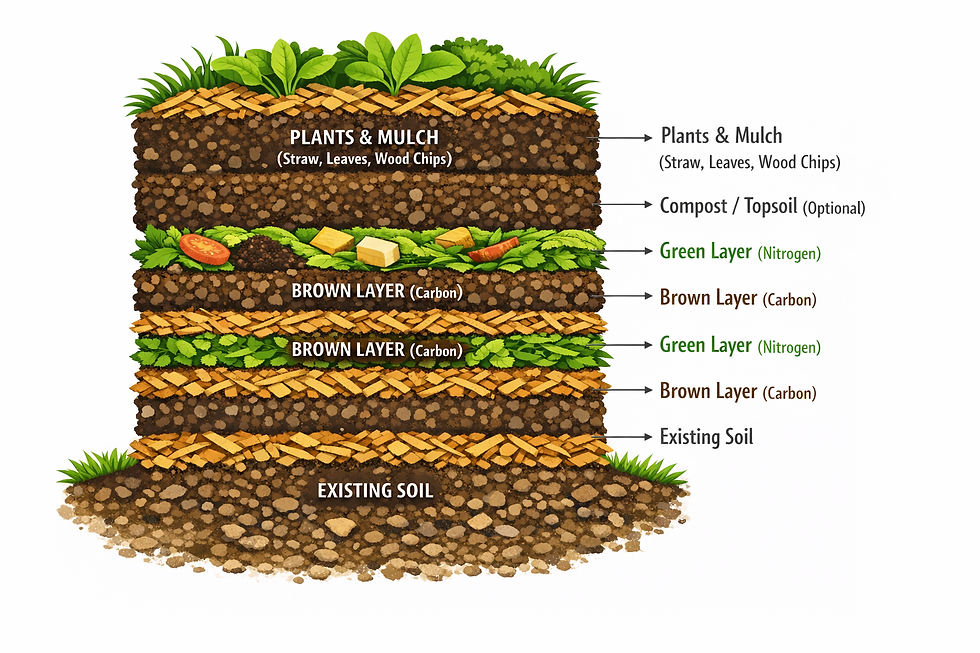
Lasagna gardening involves layering organic materials directly on the ground (or in a raised bed) to create soil. Instead of turning over existing soil, gardeners place alternating layers of “brown” (carbon-rich) and “green” (nitrogen-rich) materials. Over weeks or months, these layers decompose, feeding soil organisms and creating loose, fertile soil ready for planting.
This method works especially well when starting new garden beds, reclaiming poor or compacted soil, or converting lawn space into productive plots.
Suitable Inputs: What Goes Into the Layers?
Successful lasagna gardening depends on using the right materials and balancing them properly.
Brown (Carbon-Rich) Layers
These provide structure and help prevent odor and pests:
Dry leaves
Straw or hay
Shredded paper
Wood chips or sawdust (thin layers only)
Important note: Cardboard and newspaper are NOT permitted in our garden. They can contain impurities and/or toxins in the raw or recycled base materials, adhesives, and inks that will contaminate the soil.
Green (Nitrogen-Rich) Layers
These fuel decomposition and add nutrients:
Vegetable scraps
Coffee grounds and filters
Fresh grass clippings
Plant trimmings
Manure from herbivores (well-aged if possible)
Spent garden plants (disease-free)
Optional Additions
Finished compost
Topsoil (thin layers to introduce microbes)
Crushed eggshells (for calcium)
Seaweed (rinsed, if available)
The general rule is to alternate layers, keeping browns slightly thicker than greens to maintain balance and avoid smell.
Pros of Lasagna Method Gardening
1. No Digging or Tilling
This is one of the biggest benefits, especially in community gardens with volunteers of varying physical abilities. Beds can be built without heavy tools or strenuous labor.
2. Improves Poor Soil Over Time
Lasagna gardening feeds soil life—worms, fungi, and microbes—which gradually improves structure, drainage, and nutrient availability. Even compacted or clay-heavy soils can be transformed.
3. Makes Use of Local Waste
Community gardens often generate plant waste, coffee grounds, and cardboard. This method turns “waste” into a resource, reducing disposal costs and supporting sustainability goals.
4. Suppresses Weeds
The initial cardboard or newspaper layer blocks sunlight, smothering existing weeds and reducing weed pressure in the first growing season.
5. Encourages Community Participation
Layering days can become group work sessions or workshops. It’s an accessible way to teach composting, soil health, and ecological gardening principles.
Why Not Tilling Matters: Soil Life, Soil Health, and Plant Growth
One of the most important—yet often overlooked—benefits of lasagna method gardening is that it avoids tilling or turning the soil. While tilling has long been a common gardening practice, research and experience increasingly show that leaving soil undisturbed creates healthier growing conditions, especially in community garden settings.
Protecting Soil Microbes
Healthy soil is alive. Billions of bacteria, fungi, and other microorganisms live in the soil, forming complex networks that help plants access nutrients and water. When soil is tilled, these networks are physically broken apart. Fungal hyphae, in particular, are damaged by repeated disturbance, reducing their ability to transport nutrients to plant roots.
Lasagna gardening allows these microbial communities to remain intact. As organic layers break down from the top down, microbes feed gradually and consistently, creating a stable, biologically active soil system. This leads to:
Better nutrient cycling
Improved soil structure
Increased resilience to drought and disease
Supporting Worm Populations
Earthworms are essential soil engineers. They tunnel through soil, improving aeration and drainage, and their castings are rich in plant-available nutrients. Tilling disrupts worm tunnels and can injure or kill worms directly.
In a no‑till lasagna bed, worms naturally migrate upward into the decomposing layers, where food is abundant. Over time, they pull organic matter deeper into the soil, doing the work of “turning” the soil without damaging it. This results in looser, more crumbly soil that roots can easily penetrate.
Better Soil Structure Over Time
When soil is left undisturbed, it develops stable aggregates—small clumps that hold air, water, and nutrients in balance. Tilling temporarily loosens soil, but it often leads to compaction later as aggregates collapse.
Lasagna gardening builds structure slowly and sustainably. As layers decompose:
Soil becomes easier to work each season
Water infiltration improves
Erosion and surface crusting are reduced
This is especially valuable in community gardens where plots may be walked on frequently or worked by many hands.
Healthier Plants with Stronger Roots
All of this underground activity directly benefits the plants growing above it. With active microbes and worms:
Nutrients are released gradually, reducing the need for added fertilizers
Roots grow deeper and more evenly
Plants experience less stress during heat or dry periods
Gardeners often notice stronger growth, better yields, and fewer disease problems in no‑till, layered beds compared to heavily worked soil.
A Long‑Term Approach That Pays Off
Lasagna method gardening isn’t just about convenience—it’s about working with natural systems instead of against them. By avoiding tilling and allowing soil life to thrive, community gardens can build fertility year after year while reducing labor and inputs.
In shared garden spaces, where soil health affects everyone, protecting microbes and worms helps ensure that beds remain productive, resilient, and welcoming for seasons to come.
Cons and Challenges to Consider
1. Time to Decompose
Lasagna beds work best when built in fall for spring planting. If built in early spring, materials may not break down quickly enough for some crops.
2. Material Availability
A steady supply of suitable browns and greens is essential. Community gardens need coordination to avoid shortages—or excess of one type.
3. Potential for Pests
Food scraps can attract rodents if not properly buried under brown layers. Clear guidelines and supervision are important in shared spaces.
4. Uneven Breakdown
Beds may settle unevenly as materials decompose, requiring topping up with compost or mulch during the season.
5. Not Ideal for All Crops Immediately
Root crops like carrots or parsnips may struggle in partially decomposed beds during the first year. Leafy greens and squash tend to perform better early on.
Benefits in a Community Garden Setting
Lasagna method gardening aligns well with the values and realities of community gardens:
Cost-effective: Reduces the need for purchased soil and fertilizers.
Inclusive: Accessible for gardeners with limited mobility or experience.
Educational: Demonstrates closed-loop systems and soil ecology.
Scalable: Works for individual plots or large shared beds.
Environmentally responsible: Supports composting, waste reduction, and soil regeneration.


Comments